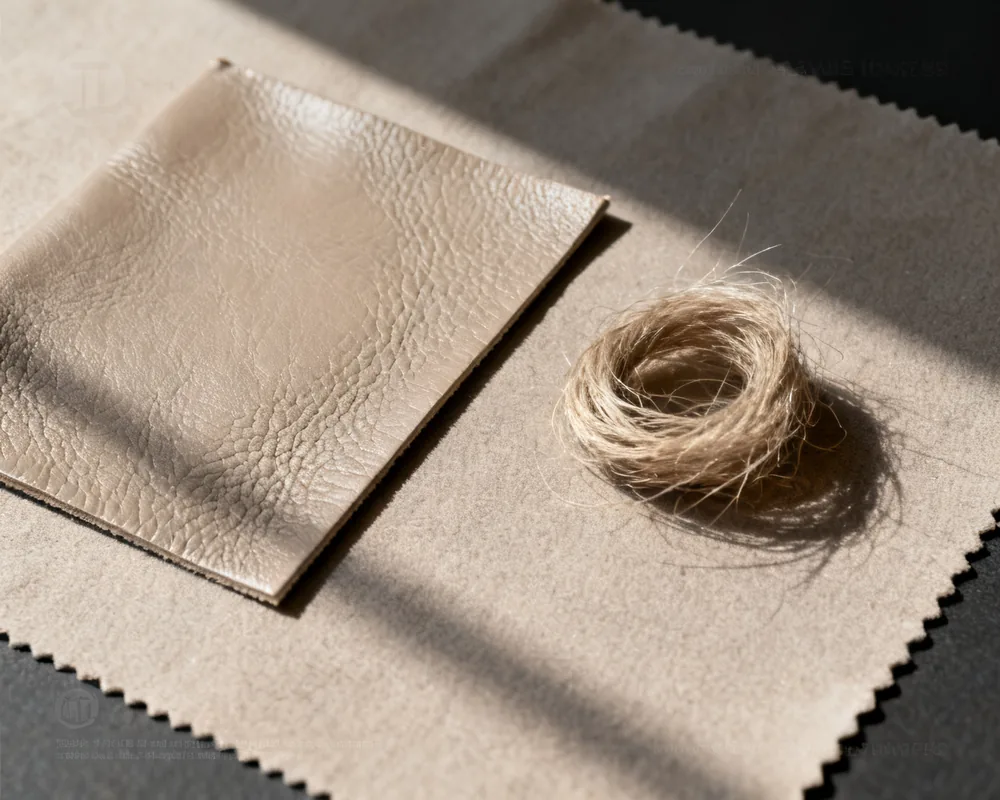
Unbranded synthetic leather swatch beside a fiber specimen on a neutral inspection cloth

Kuraray — Begin with the material build

Separate a synthetic leather surface question from a fiber question before you compare finish, backing or supply format.

Discuss your fabric requirements

Technical information routes

Material scope

Two Kuraray enquiry families. Open the catalogue, then name the one you are comparing.
Material family Review first Next step
Synthetic Leather and Coated Fabrics Surface finish, backing and bonding compatibility for the chosen construction. Do not assume a coating or a laminate until the material record says which one applies. Browse scope
Yarns, Fibers and Threads Linear density and the supply format that actually applies, such as cut fiber, tow or package. Width and roll length are not default fiber fields. Discuss suitability
Open the technical checklist

These fields structure a surface brief. For kuraray pva fiber, replace width and finish with linear density and supply format, and leave unused rows blank rather than inventing a coating.

Discussion fields for a surface brief. No performance number is stated here.
Field Target question Evidence question
Composition Which face and backing polymers are named for this surface, or which fiber chemistry is named for a fiber lot? Ask for the material-specific declaration that matches that reference.
GSM For a coated or leather-like surface, what mass target and tolerance are in the brief? Confirm the specimen, the method and whether the figure includes backing.
Usable width For roll goods, where does the cuttable area stop relative to the selvedge? Keep the agreement at roll level. Do not copy a width onto a fiber supply.
Finish Describe grain, gloss, emboss or other face treatment only when it belongs to the chosen surface. Request the finish record. A bio-based wording still needs its own scope note.

Read a surface note and a fiber note as separate files. For the surface, ask for composition as percent by mass, with the named parts adding to 100, mass in g/m², and usable width in cm inside the selvedge. For a kuraray pva fiber note, ask for linear density in dtex or denier. Do not convert one unit into the other here: 1 denier is about 1.11 dtex, so a copied conversion without the source unit is a different figure. If a report cites conditioning, ask whether the specimen used the standard textile atmosphere of 20 °C and 65% relative humidity, with the usual tolerances of 2 °C and 4% relative humidity in ISO 139. Those figures describe the room the specimen should have seen. They are not a Kuraray performance result, a plant output, or a certificate.

A covering brief and a fiber brief can share a desk and still need two outcomes. Background: a buyer holds a leather-like cutting and a loose fiber sample under the same brand name. Process: the surface file records grain, backing and bond, while the fiber file records chemistry, linear density and package format. Result: the next question lists which file is incomplete, and no abrasion, tear strength or tenacity figure is moved from one file to the other.

Match the application

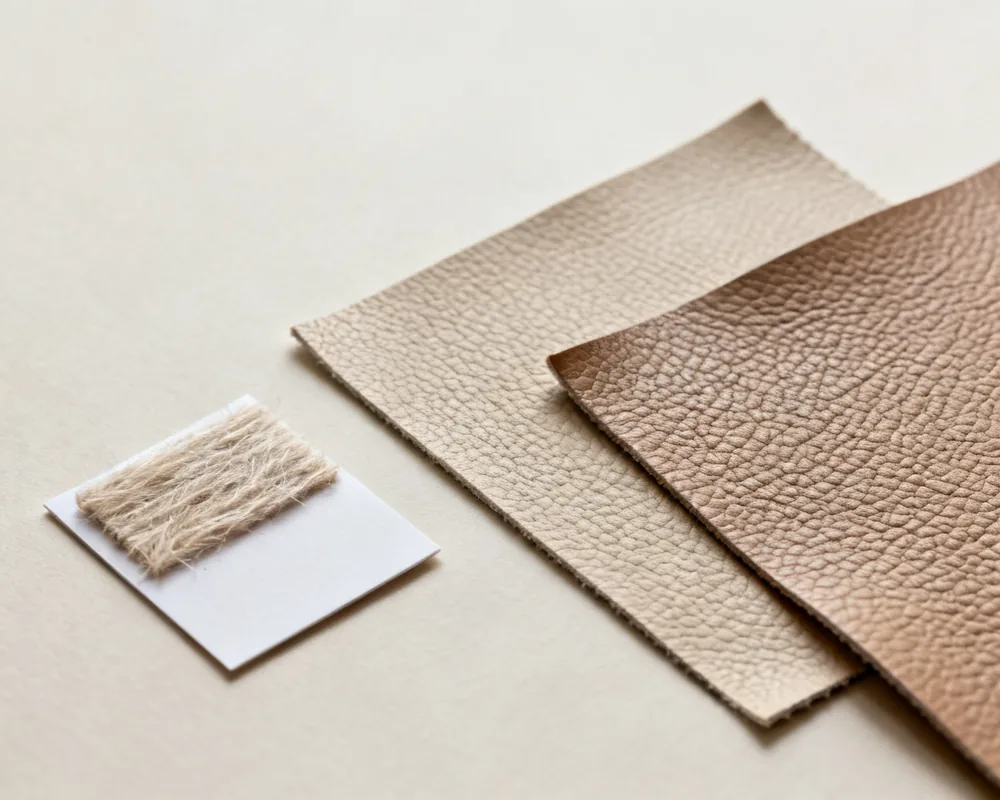
Unbranded synthetic leather swatches arranged beside a fiber card on a selection table
Surface selection
Describe the touch, the visual grain and the maintenance the covering will see. Handfeel and abrasion are separate observations.
Backing and bond
State how the surface will be joined or adhered, then ask whether the backing and bond on the reference are compatible with that route.
Fiber comparison
If the brief is kuraray fibers rather than a surface, compare linear density and package identity. Do not borrow a leather finish vocabulary.

Fabric selection questions

Why is GSM not enough?

Mass does not show grain depth, backing cloth or whether a bond line is present. Two surfaces can share a nominal weight and still differ in flex and sewing behaviour. A softer face can be chosen for handfeel and then mark sooner under abrasion; a tougher face can hold an abrasion endpoint and feel drier. Those observations stay in separate columns, with the method named for the abrasion side and the physical swatch kept for the handfeel side.

How should I describe a sample?

For a CLARINO-related surface, note the face, the backing and the dated reference you are matching. For a fiber, note chemistry, linear density and the supply format in front of you.

Can test results be compared directly?

Only when method, specimen state and product scope match. A surface abrasion note and a fiber tenacity note answer different questions and should stay in separate columns.